








 Periodontal disease is not a phrase that is as well known as gum disease, but it is a very common form of the problem, which occurs when the bacterial balance falls out of equilibrium. That is to say that when bad bacteria outweigh good bacteria in the mouth for an extended period of time, periodontal disease is allowed to spread. It causes inflammation, discomfort, and can even result in bone deterioration. If it is allowed to progress, it can even impact overall systemic health.
As scary as this dental problem is, there may be renewed hope of its prevention. A recent study utilizing lab mice allowed researchers to both thwart the disease all together and to stop its progression after diagnosis. The researchers were a team from the Department of Microbiology in Penn’s School of Dental Medicine, and they found it possible to block a molecular receptor that was a known target of the bacteria that cause periodontal disease.
The receptor, referred to as C5aR, was attacked by harmful bacteria, thereby stopping the immune response typical in a human body and increasing gum inflammation. Another set of receptors, referred to as TLRs, complement the C5aR response. In order to demonstrate the part that these receptors play in the formation of gum disease, the researchers injected molecules (known to activate C5aR and the TLRs) into the gums. It was noted that inflammation increased substantially, but when the researchers used a synthesized molecule, called C5aRA, they were able to stop 80% of the inflammation seen in typical periodontal disease and even in those mice already affected, they could reduce the swelling by 70%.
To better understand what this means to the dental community, continue reading the full article.
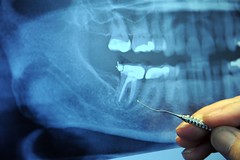
Photo by: Dr. Alan Carr points out the broken root or bad root canal of a right rear molar (tooth), dental tool, orthodontist’s office, full jaw Xray, Factoria, Washington, USA / Wonderlane / CC BY 2.0





Leave a Reply
You must be logged in to post a comment.