After receiving a dental crown, many patients notice mild pressure when chewing or brief sensitivity to temperature during the first few days. These early sensations often raise important questions: Will a crown feel like a real tooth, and how long does it take to adjust? Dental crowns are carefully designed to replicate the look and function of natural enamel, but comfort can vary depending on bite alignment, gum health, and individual nerve response. With proper fit, thorough bite evaluation, and consistent care, most patients adapt quickly and experience long-term comfort. Understanding the factors that influence how a crown feels can help set realistic expectations and ensure a smooth transition to everyday use.
What Is a Dental Crown and When Is It Needed
Although crowns can seem complex, a dental crown is simply a custom-made cap that covers and protects a damaged or weakened tooth. We recommend crowns when a tooth has had a root canal, contains a large filling with little natural structure left, shows cracks or heavy wear, or has weak enamel at risk of fracture. A crown restores shape, strength, and function while preserving the underlying tooth. We select crown materials, such as ceramic, porcelain-fused-to-metal, or zirconia, based on bite forces, aesthetics, and location. With proper hygiene and regular exams, crown longevity typically ranges 10–15 years or longer, protecting your smile and comfort.
How Modern Dental Crowns Are Designed
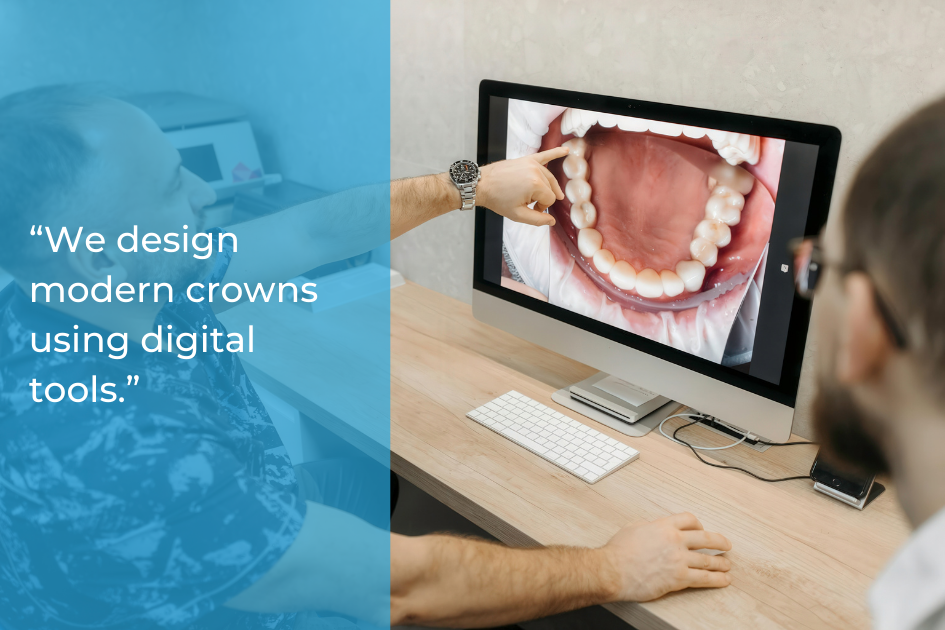
Because precision drives long‑term success, we design modern crowns using digital tools and meticulous customization. We begin with digital impressions to capture your tooth and bite with micron‑level accuracy, avoiding distortion from traditional molds. Next, we plan custom sizing and contouring so the crown fits your neighboring teeth and supports healthy bite alignment. We select materials, porcelain, ceramic, or porcelain‑fused options, based on strength, translucency, and location in your mouth. Shade matching blends the crown with your smile under varied lighting. Finally, we refine occlusion and margins, verifying contacts on models and in your mouth to protect enamel, gums, and long‑term function.
Do Dental Crowns Feel Natural at First?
Naturally, most new crowns don’t feel perfectly “invisible” on day one. Right after placement, many patients notice initial sensations: brief temperature sensitivity, a mild “high spot,” or a sense of fullness around the tooth. These adjustment experiences reflect normal nerve response and the bite settling as tissues accommodate the restoration. Light pressure with chewing is typical and should steadily diminish. What isn’t normal: sharp or lingering pain, hot/cold sensitivity that persists, or pain when releasing after biting, signals that the bite may be off or the nerve irritated. If you feel these, we want to evaluate promptly and fine‑tune your occlusion.
How Long Does It Take to Adjust to a Crown
For most patients, adjustment to a new crown takes a few days to two weeks as your bite, muscles, and nerves recalibrate. We monitor the adjustment timeline by checking how you chew and speak, since minor lisping or cautious chewing often resolves as muscle memory updates. You might notice brief temperature sensitivity or a “high spot”; if so, we fine-tune the bite. Key adaptation factors include crown material, opposing tooth wear, prior grinding, gum health, and whether it’s a front or molar tooth. Soft foods initially, small bites, and guided jaw exercises help. If discomfort persists beyond two weeks, contact us.
How Crowns Compare to Natural Teeth in Daily Life
As those first days of adjustment pass, it helps to know how a crown performs next to a natural tooth in daily life. With proper fit, chewing comfort is comparable; we balance biting pressure so forces distribute like a natural cusp. Speech typically normalizes quickly as the tongue adapts to the crown’s contour. Some temperature sensitivity can occur early, especially with metal-based crowns, but it usually resolves as the nerve settles. Texture and thickness are designed to match neighboring teeth, minimizing awareness. Stability is high: a well-bonded crown resists movement under function, preserving bite alignment and protecting the restored tooth.
Common Concerns Patients Have About Crowns
Wondering what to expect with a crown? We hear common questions rooted in real patient experiences. “Will it look fake?” With modern crown materials and shade-matching, crowns blend with adjacent teeth. “Will food get stuck?” Proper contours and flossable margins minimize trapping; good hygiene prevents plaque. “Will it fall off?” When tooth preparation and adhesive protocols are precise, retention is strong; rare loosening is repairable. “Will I feel it when I sleep?” After a brief adaptation, most patients don’t notice it. “Can it crack?” All ceramics and zirconia are durable, yet like natural enamel, excessive forces or grinding can cause fractures.
What Makes a Crown Feel More Natural
Although every smile is unique, a crown feels most natural when we get five essentials right: a precise fit that hugs the prepared tooth, an accurately adjusted bite that matches your chewing pattern, high‑quality materials chosen for your enamel shade and strength needs, skilled placement that seals margins and shapes lifelike contours, and ongoing care to keep gums healthy and contacts clean.
We verify fit with magnification and contact mapping, then refine bite alignment using articulating film to remove high spots. We select crown materials, ceramic, zirconia, or hybrid, based on wear patterns and esthetics. Meticulous cementation prevents microleaks. Finally, we monitor tissues so your crown functions comfortably.
How to Care for a Dental Crown
Steady, simple habits keep a crown strong and comfortable. For crown maintenance, we pair consistent dental hygiene with small daily choices that protect the restoration and the tooth beneath. We brush twice daily with a soft brush and low-abrasive fluoride toothpaste, and we floss with a glide-style thread or water flosser to clean the crown’s margins precisely. We also limit forces that can chip porcelain and monitor for changes in bite or wear.
- Brush gently along the gumline; angle bristles 45 degrees.
- Floss under the contact to sweep plaque at the margin.
- Avoid hard, sticky foods and ice.
- Wear a nightguard if we clench or grind.
When to Call Your Dentist About a Crown
Good home care keeps a crown working well, but some changes mean we should call the dentist promptly. If we notice persistent pain or crown discomfort beyond a few days, it may signal inflammation, a micro‑fracture, or nerve irritation. A high bite, teeth touching early, can cause soreness or cracking and needs an adjustment. A loose feeling suggests failing cement or decay; timely recementing protects the tooth. Dental sensitivity that doesn’t improve, especially to cold or pressure, warrants evaluation for leakage or pulp stress. Ongoing gum irritation, swelling, or bleeding around the crown may indicate excess cement or gum disease. Let’s schedule promptly.
Conclusion
In this journey, a crown’s like a well-crafted shoe: at first, we notice the stitch and squeeze, then stride without thinking. We’ve reviewed what crowns are, how they’re designed, and why early sensitivity and bite tweaks are normal. With small adjustments, good hygiene, and follow-up, most crowns feel and function like natural teeth. If something rubs, clicks, or aches, we don’t wait; we call. Together, we fit the shoe to the road, so every step and smile works as it should. Ready to make your crown feel like a natural part of your smile? Schedule an appointment with Austin Dental Center today to get personalized guidance and adjustments.