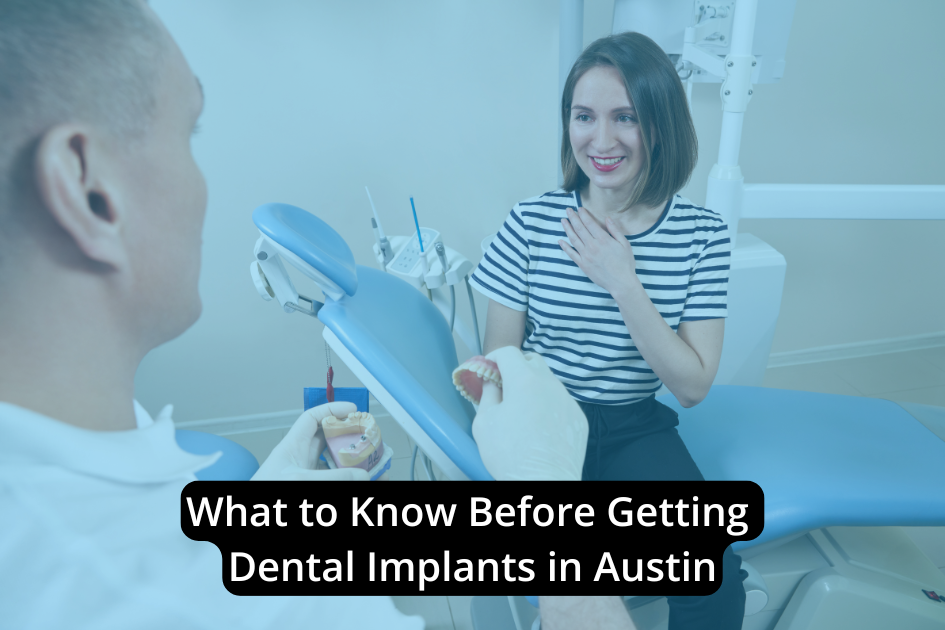
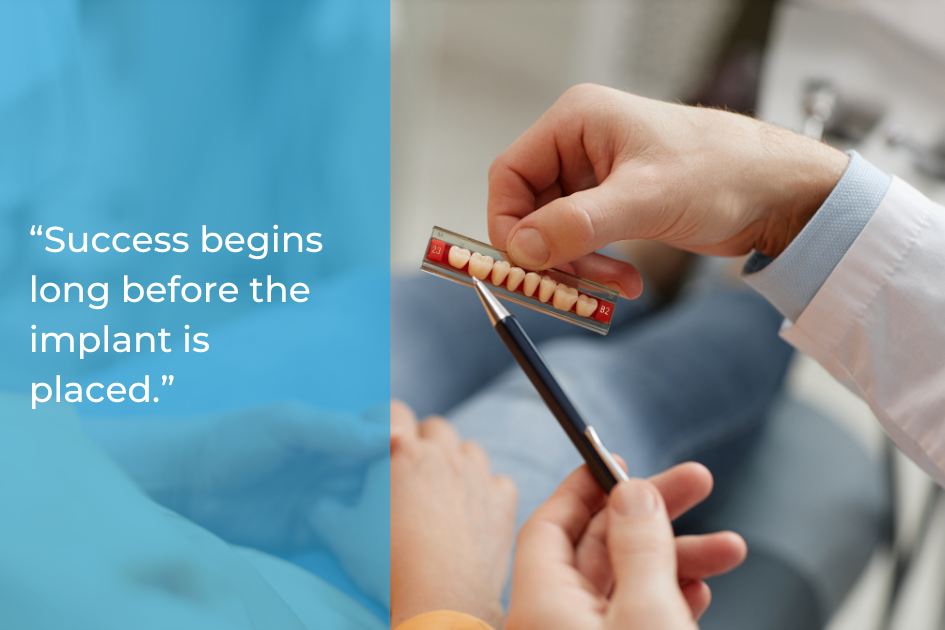
Considering dental implants in Austin? Success begins long before the implant is placed. A thorough medical and dental evaluation, healthy gums, and strong bone support all play a vital role in long-term results. Advanced diagnostics like 3D imaging help confirm jawbone density, while your dentist assesses bite function, gum health, and overall suitability. It’s also important to understand how implants fuse with the jaw over several months, the timeline for healing and restoration, and why consistent oral care influences longevity. Clear communication about costs, treatment stages, and maintenance ensures you feel confident and informed every step of the way.
Here’s what truly determines implant success, and the factors that can quietly undermine it.
Understanding How Dental Implants Work
Although they look and feel like natural teeth, dental implants are engineered systems that replace a missing tooth root and support a lifelike crown. We place a biocompatible fixture, most often titanium or zirconia, selected from proven implant materials, into the jawbone. Through osseointegration during the healing process, bone fuses to the implant, creating stable anchorage. Success factors include bone density, periodontal health, systemic conditions, and smoking status. After integration, we attach an abutment and a custom crown. Meticulous postoperative care, plaque control, antimicrobial rinses, and monitored loading support longevity. We’ll also discuss lifestyle adjustments such as smoking cessation, bruxism management, and nutrition.
Key Benefits You’ll Notice With Implants
Confidence returns first. With implants, we see a measurable confidence boost because teeth look and function like natural structures. You’ll notice aesthetic enhancement from lifelike contours and shade matching, plus comfort improvement since implants don’t shift like dentures. Functionally, implants transfer bite forces to bone, supporting oral health by maintaining bone volume and protecting adjacent teeth. Evidence shows high implant longevity when hygiene and maintenance are consistent. Stability improves chewing efficiency and speech clarity, reducing dietary restrictions. Secure anchorage also supports bridges without clasps. Overall, implants integrate predictably and help us restore durable function, precise esthetics, and everyday comfort.
Who Is a Good Candidate in Terms of Health
When we evaluate candidacy for dental implants, we look for patients with healthy gums, good plaque control, and sufficient jawbone volume and density to support osseointegration. We review overall oral health, bone density, and your medical history to identify conditions that impair healing, such as uncontrolled diabetes, immunosuppression, or active periodontitis. We assess medications linked to bone metabolism (for example, bisphosphonates) and smoking or vaping as key lifestyle factors affecting success rates. We also confirm you can maintain meticulous hygiene and attend follow-ups. Finally, we align treatment expectations with evidence-based timelines, potential risks, and maintenance needs so outcomes remain predictable and durable.
Assessing Jawbone Density and Grafting Needs
Building on overall health screening, we measure jawbone volume and density to confirm the site can support an implant and achieve stable osseointegration. We perform a jawbone evaluation using CBCT imaging to map bone height, width, and quality, then correlate findings with implant stability factors such as primary torque and bone type. When deficiencies exist, we discuss bone grafting options, particulate, block, or guided bone regeneration, to restore dimensions. In the posterior maxilla, a sinus lift procedure may be indicated to gain vertical height. We’ll align treatment with your goals and healing time considerations, balancing graft maturation timelines with predictable, durable outcomes.
The Step-by-Step Implant Process in Austin
Although every case is unique, our implant process in Austin follows a defined sequence to maximize predictability and comfort. We start with diagnostics, CBCT imaging, periodontal evaluation, and medical review to select appropriate implant types. Next, we coordinate with specialists for guided placement using sterile technique and local anesthesia with optional sedation for pain management. We verify primary stability and place a healing component.
Postoperatively, we provide evidence-based aftercare instructions, recovery tips, and medication protocols. We schedule follow-ups to monitor soft-tissue maturation and occlusal considerations. We also review lifestyle adjustments, nutrition, smoking cessation, bruxism protection, and hygiene to protect integration and reduce complications. Finally, we plan precision-matched abutment selection.
Timeline: From Placement to Final Restoration
Because predictability matters, we map your implant timeline from day one: after placement, most implants require 8–12 weeks for osseointegration in the lower jaw and 12–16 weeks in the upper jaw, with variations based on bone density, grafting, and systemic health. We set clear recovery expectations: initial soft-tissue healing takes 7–14 days, while the integration period drives stability. During the healing process, we monitor comfort, hygiene, and occlusion. Follow-up appointments occur at one week, six to eight weeks, and before abutment connection. If grafts were placed, we extend the intervals. Final restoration proceeds once torque testing confirms adequate integration.
Types of Implant-Supported Restorations
Choice defines outcomes: implant-supported restorations range from single-tooth crowns to multi-unit bridges and full-arch solutions, each matched to the number of missing teeth, bite forces, and bone support. We evaluate implant types and restoration options with CBCT imaging, occlusal analysis, and periodontal status. For a single gap, a crown on one implant preserves adjacent teeth. Short spans may use implant-supported bridges. Edentulous arches can receive fixed dentures on 4–6 implants for maximal stability. Removable prosthetics can snap onto 2–4 implants for enhanced retention. Hybrid solutions combine a milled framework and acrylic or ceramic teeth, balancing retrievability, hygiene, and durability.
Caring for Your Implants Long Term
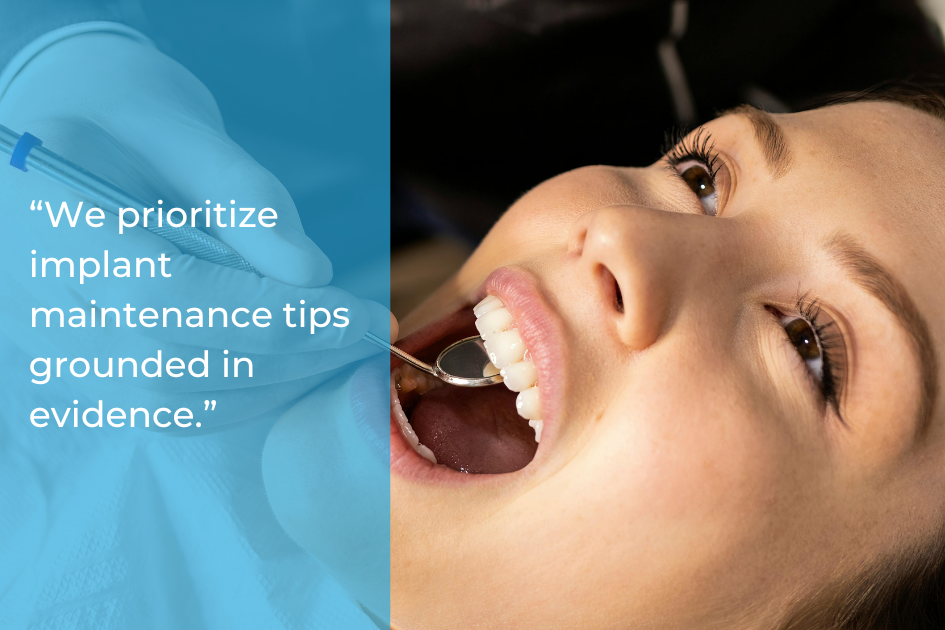
Although implants look and feel like natural teeth, they demand the same disciplined care to protect the surrounding gums and bone. We prioritize implant maintenance tips grounded in evidence: consistent plaque control, inflammation monitoring, and timely interventions. Let’s lock in daily hygiene practices, soft brush, low-abrasive paste, interdental brushes or water flossers, and alcohol-free antiseptic rinses. We’ll use night guards if we clench. Dietary considerations include limiting hard kernels, sticky candies, and frequent acidic exposures. Schedule regular check-ups for probing depths, occlusion review, and radiographs. When managing discomfort, contact us early; persistent soreness, mobility, or bleeding requires evaluation to prevent peri-implant disease.
- Brush and interdental clean twice daily; target the implant collar
- Choose non-abrasive toothpaste; avoid whitening grit
- Limit hard, sticky, and acidic foods; prioritize hydration
- Maintain 3–6 months of professional maintenance and radiographic monitoring
Choosing the Right Austin Implant Team
What matters most when we select an Austin implant team is proven competence, coordinated care, and clear communication. We prioritize choosing specialists, periodontists, oral surgeons, and restorative dentists who demonstrate measured outcomes, documented case numbers, and complication rates. When evaluating experience, we confirm advanced training, CBCT-guided planning, and evidence-based protocols. We review patient reviews for patterns in satisfaction, pain control, timelines, and follow-up. We stress consultation importance: a thorough exam, risk assessment (bone density, medical history), clear sequencing, and transparent fees. Finally, we verify team collaboration: shared treatment plans, digital records, and coordinated surgical–restorative handoffs that protect function, esthetics, and longevity.
Conclusion
As we weigh candidacy, plan imaging, and map timelines, think of implants as roots seeking steady soil. With healthy gums, adequate bone or grafting, and a commitment to hygiene, we can guide osseointegration over 8–16 weeks and beyond. Evidence supports high success when we manage risks like smoking and systemic disease. Together, we’ll choose the right restoration, verify costs and coverage, and schedule follow-ups. In Austin’s hands, your renewed bite isn’t just hardware, it’s a planted future, built to last. Ready to take the next step? Call Austin Dental Center in Austin, TX, today to schedule your consultation and personalized treatment plan.




 Technological advances in dentistry are adding up to better oral health for countless people throughout the U.S. and around the world. One of the most popular dental procedures for replacing missing or damaged teeth is the dental implant. Considering the advantages, it’s easy to see why more and more people are choosing dental implants: